

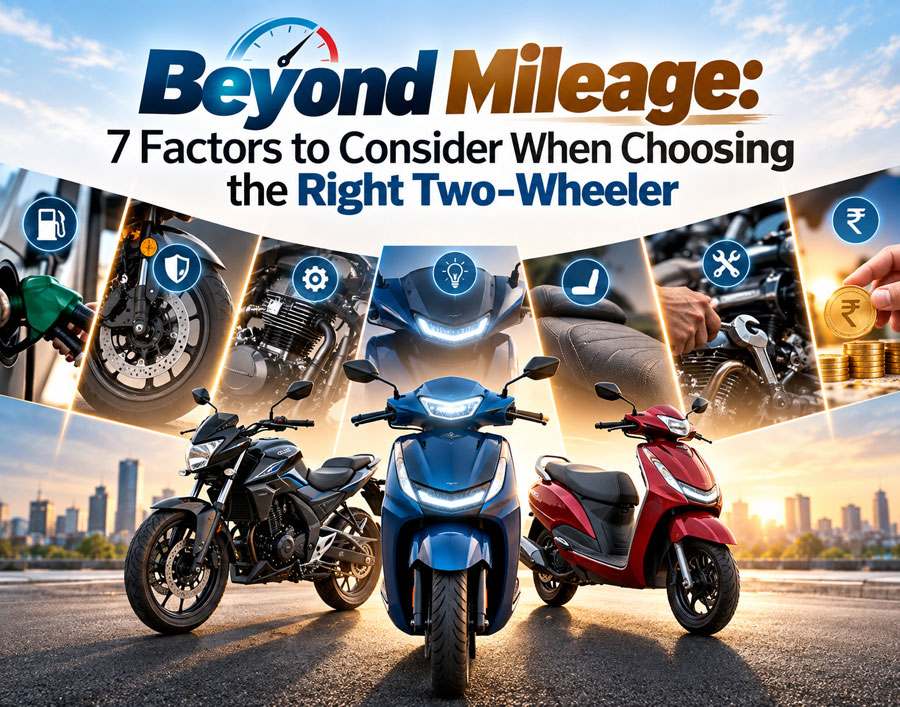
Choosing a two-wheeler is an important decision, whether you need a convenient vehicle for daily commuting, a comfortable ride for family errands, or a reliable option for longer journeys. While mileage is often one of the first things buyers compare, it should not be the only factor influencing your decision.
The right two-wheeler should suit your budget, riding habits, comfort preferences, and everyday travel requirements. Considering these factors before making a purchase can help you find a vehicle that offers practical value over the long term.
Here are seven essential factors to consider when choosing the right two-wheeler.
1. Mileage and Fuel Efficiency
Fuel efficiency is an important consideration, especially if you travel regularly to work, college, or other destinations.
A fuel-efficient vehicle can help reduce running costs over time. However, the mileage you achieve depends on several factors, including riding style, traffic conditions, vehicle maintenance, load, and road conditions.
Before choosing a model, compare its claimed fuel efficiency with owner experiences and independent road tests where available.
For electric two-wheelers, consider energy consumption, real-world range, charging costs, and the availability of convenient charging facilities.
Choose a vehicle that balances efficiency with your actual travel needs rather than relying on advertised figures alone.
2. Budget and Total Ownership Cost
Your budget should include more than the vehicle's advertised price. Understanding the total cost of ownership helps you make a financially informed decision.
Consider the following expenses:
Ex-showroom and on-road prices
Registration and insurance
Fuel or electricity costs
Scheduled servicing and maintenance
Replacement tyres, brakes, and other parts
Loan interest, if applicable
Compare the on-road prices of different models and check the cost of routine maintenance.
A lower-priced vehicle may be attractive initially, but spare-parts availability, service expenses, and long-term running costs can also influence its overall value.
3. Comfort and Riding Ergonomics
Comfort matters when you use a two-wheeler every day. A model that feels comfortable during a short test ride may feel different during a longer commute.
Before purchasing, check:
Seat height and seating position
Seat cushioning and space for a passenger
Handlebar reach and riding posture
Footrest placement
Suspension performance on uneven roads
Vehicle weight and ease of handling
If possible, take a test ride on roads similar to those you normally travel on.
Choose a vehicle that feels manageable when turning, parking, and moving at low speeds. If you frequently travel with a passenger, assess the comfort of both the rider and pillion.
4. Safety Features and Braking Performance
Safety should be a priority when selecting any two-wheeler. Look for suitable braking performance, predictable handling, and safety features appropriate to the model.
Depending on the vehicle, useful features may include:
Anti-lock braking system (ABS), where available
Combined braking system (CBS)
Good-quality tyres with suitable grip
Headlamps and indicators with adequate visibility
Stable handling and effective suspension
Side-stand safety features, where provided
Check the specific variant's safety equipment rather than assuming every version has the same features.
Wear a properly fitted, certified helmet and use appropriate protective gear. Safe riding practices, regular maintenance, and awareness of road conditions remain essential even when the vehicle includes advanced safety features.
5. Engine Performance or Electric Motor Capability
The performance you need depends on where and how you ride.
For petrol-powered two-wheelers, consider engine capacity, acceleration, smoothness, and suitability for your usual routes. A smaller engine may be adequate for city commuting, while frequent highway travel may require different performance characteristics.
For electric two-wheelers, evaluate motor output, real-world range, battery warranty, charging time, and the availability of service support.
Do not select a vehicle based on engine capacity or peak power alone. Consider whether its performance suits your daily travel, traffic conditions, passenger requirements, and experience level.